


Tyre Dispatch - V4C Final Production
NZ WOF Tyre Guide – Tyre Dispatch

🛡️ NZ WOF TYRE GUIDE

Everything you need to know about tyre requirements for WOF certification

1.5MM
Min Tread (Standard)
4MM
Min Tread (Winter)
5%
Max Diameter Change
≤2
Load Index Difference

📋 QUICK WOF TYRE CHECKLIST

Tread depth ≥ 1.5mm (4mm winter)
Same size on each axle
Same pattern type per axle
Same carcass type per axle
Within 5% of original diameter
Correct speed rating for vehicle
No damage, bulges, or deep cracks
All markings visible

⚠️ Tyres are one of the most common reasons for WOF failure in NZ — scroll down for detailed requirements

📏
UNDERSTANDING TYRE SIZES

Learn how to read tyre sizes and what each number means. Click the icons for detailed explanations.

METRIC SIZING Most Common

Used on most passenger cars, SUVs, and vans. Example: 205/55R16 91V

Metric tyre size on sidewall Size code on sidewall
Metric tyre dimensions What the numbers mean
205/55R16 91V
205 Width (mm)
55 Profile %
R Radial
16 Rim (in)
91 Load Index
V Speed
🧮 SIZE CALCULATOR
Ø632mm 205mm 113mm R16
Cross-section view (not to scale)
/
R
632mm Overall Diameter
113mm Sidewall Height
1985mm Circumference
615kg Load Capacity
504 Rev/km

IMPERIAL SIZING 4x4 / Off-Road

Used on 4x4s, trucks, and off-road vehicles. Example: 31×10.5R15 109Q

Imperial tyre size on sidewall Size code on sidewall
Imperial tyre dimensions What the numbers mean
31×10.5R15 109Q
31 Height (in)
10.5 Width (in)
R Radial
15 Rim (in)
109 Load Index
Q Speed
🧮 IMPERIAL SIZE CALCULATOR
×
R
787mm Diameter (mm)
267mm Width (mm)
203mm Sidewall Height
1030kg Load Capacity
💡 Common Vehicles with Imperial Sizes: Toyota Hilux, Ford Ranger, Mitsubishi Triton (older models), Jeep Wrangler, Land Rover Defender, older 4WD wagons, and most vehicles designed for off-road use.

SPECIAL SIZE CODES

Letters that may appear in tyre sizes and what they mean for WOF compliance.

Code Meaning Example WOF Notes
P P-Metric (Passenger) P195/65R15 US passenger car standard. Same-axle matching applies.
LT Light Truck LT265/70R17 For utes and vans. Higher load capacity construction.
ZR Z-Rated (240+ km/h) 215/45ZR17 High-speed rated. Still has speed symbol after.
RF / XL Reinforced / Extra Load 205/55R16 94V XL Higher load capacity. Requires higher pressure.
C Commercial 195/75R16C 107R For vans/commercial vehicles. Higher ply rating.
R Radial Construction 205/55R16 Standard. Cannot mix with bias-ply on same vehicle.
D / B Diagonal / Bias-Ply 6.50-16 D Older construction. Cannot mix with radials on same axle.
F Run-Flat 225/45RF17 Self-supporting tyre. Cannot mix with non-runflat on same axle.
⚠️ WOF Critical: Different construction types (Radial vs Bias-Ply vs Run-Flat) CANNOT be mixed on the same axle. This is an instant WOF fail.

OTHER SIZE FORMATS

Less common size formats you may encounter on older or specialty vehicles.

155R13 — "Full Profile" Format

When no profile number is shown, the tyre has an 80% aspect ratio (standard profile).

155R13 78T
  • 155 = Width in mm
  • R = Radial construction
  • 13 = Rim diameter in inches
  • 78T = Load index 78, Speed rating T
  • Implied: 80% profile = 155×0.80 = 124mm sidewall

Common on: Older Japanese cars, trailers, classic vehicles

7.00R16 — Numeric Format

Used on commercial vehicles, trucks, and older 4WDs. Width is in inches with approximate conversion.

7.00R16 117/116N
  • 7.00 = Width in inches (≈178mm)
  • R = Radial construction
  • 16 = Rim diameter in inches
  • 117/116 = Single/Dual load indices
  • N = Speed rating (140 km/h)

Common on: Land Cruiser 70 series, older trucks, commercial vehicles

Flotation Sizing

Large off-road tyres designed for soft terrain like sand or mud.

35×12.50R17 LT
  • 35 = Overall diameter in inches
  • 12.50 = Section width in inches
  • R = Radial construction
  • 17 = Rim diameter in inches
  • LT = Light Truck rating

Common on: Modified 4WDs, Jeeps, off-road vehicles

📊 Interchangeability Table: Some imperial and metric sizes are equivalent. For example, 10/70R22.5 = 255/70R22.5 and 15R22.5 = 385/65R22.5. This applies mainly to commercial truck tyres.
⚠️ Same Axle Rule: Tyres on the same axle MUST have the same size designation. You CAN have different sizes front-to-rear (staggered fitment) as long as the diameter doesn't exceed 5% larger than original without LVV certification.
🔄
TYRE PATTERN TYPES

There are three main tread pattern types. For WOF, tyres on the same axle must have the same pattern type. Click any card for detailed info.

Symmetrical tyre tread pattern
SYMMETRICAL
Non-Directional
~60% of tyres
✓ CAN FIT ANY DIRECTION
✓ Pros
  • Easy rotation — any position
  • Cost-effective to manufacture
  • Quiet on motorway
  • Long, even tread life
✗ Cons
  • Less wet grip
  • Basic handling feel
  • Not performance-oriented
Best for: Daily driving, city commuting, budget-conscious buyers
How to identify: No arrows or "OUTSIDE" markings on sidewall
Asymmetrical tyre tread pattern
ASYMMETRICAL
Dual-Sided Design
~30% of tyres
✓ OUTSIDE MARKING
✓ Pros
  • Better cornering grip
  • Excellent wet handling
  • Optimized for mixed conditions
  • Can swap left-to-right
✗ Cons
  • Must mount correct way
  • More expensive
  • Limited rotation options
Best for: Performance cars, SUVs, mixed wet/dry conditions
How to identify: "OUTSIDE" or "THIS SIDE OUT" marking on sidewall
⚠️ WOF Fail if: Inside wall facing outward
Directional tyre tread pattern
DIRECTIONAL
V-Pattern / Arrow
~10% of tyres
→ ROTATION ARROW
✓ Pros
  • Superior water evacuation
  • Best aquaplaning resistance
  • Excellent snow/mud traction
  • Aggressive styling
✗ Cons
  • Cannot swap sides
  • Front-to-back rotation only
  • May be noisier
Best for: High-performance, wet climates, mud terrain, winter driving
How to identify: Arrow on sidewall showing rotation direction
⚠️ WOF Fail if: Fitted against rotation direction

🚗 PATTERN MATCHING EXAMPLES

For WOF, tyres on the same axle must match. Different patterns are allowed front-to-rear.

ALL MATCH — PASS
SYM
SYM
SYM
SYM
✓ Front axle: Both symmetrical
✓ Rear axle: Both symmetrical
AXLES MATCH — PASS
SYM
SYM
ASYM
ASYM
✓ Front axle: Both symmetrical
✓ Rear axle: Both asymmetrical
Different front-to-rear is OK
REAR MISMATCH — FAIL
SYM
SYM
SYM
ASYM
✓ Front axle: Both symmetrical
✗ Rear axle: SYM + ASYM mixed
WOF FAIL
BOTH MISMATCH — FAIL
DIR
ASYM
DIR
ASYM
✗ Front: DIR + ASYM mixed
✗ Rear: DIR + ASYM mixed
Move matching pairs together to pass
✗ WOF FAIL: Mixing different pattern types on the same axle (e.g., symmetrical + directional on front axle). Different pattern types are allowed front-to-rear but not side-to-side.
📐
TREAD DEPTH REQUIREMENTS

The legal minimum tread depth in NZ is 1.5mm for all tyres. However, different tyre types have different NEW tread depths — a mud terrain might start at 16mm while a passenger tyre starts at 8mm.

⚠️ Why Different Gauges Matter: If both a passenger car tyre and a mud terrain measure 6mm, the PC tyre is relatively new (75% remaining) while the mud terrain is over half worn (37% remaining). Always consider tyre type when assessing wear.
GROUP 1: PASSENGER CAR / HIGH PERFORMANCE (0-9mm new)
PC, HP, Grand Touring, Trailer — Typical new depth: 7-8mm
FAIL
REPLACE
SAFE
0mm 1.5mm 3mm 9mm (new)
0 - 1.5mm
WOF Fail
1.5 - 3mm
Replace Soon
3 - 9mm
Safe
GROUP 2: SUV HIGHWAY / COMMERCIAL / WINTER (0-12mm new)
SUV-HT, Light Truck HT, Van, Commercial Truck, Winter — Typical new depth: 9-10mm
FAIL
REPLACE
SAFE
0mm 1.5mm 4mm 12mm (new)
0 - 1.5mm
WOF Fail
1.5 - 4mm
Replace Soon
4 - 12mm
Safe
GROUP 3: ALL TERRAIN / MUD TERRAIN (0-19mm new)
SUV-AT, LT-AT, Rugged Terrain, Mud Terrain — Typical new depth: 12-16mm
FAIL
REPLACE
SAFE
0mm 1.5mm 6mm 19mm (new)
0 - 1.5mm
WOF Fail
1.5 - 6mm
Replace Soon
6 - 19mm
Safe

📋 TYRE CATEGORY REFERENCE

Group 1 (6-9mm new)
  • Passenger Car (PC)
  • High Performance / UHP
  • Grand Touring (GT)
  • Trailer tyres
Group 2 (8-12mm new)
  • SUV Highway Terrain
  • Light Truck Highway
  • Commercial Van/Truck
  • Winter / Snow tyres
Group 3 (10-19mm new)
  • SUV All Terrain (e.g., KO2)
  • Light Truck All Terrain
  • Rugged Terrain
  • Mud Terrain
✓ PASS — Above 1.5mm
  • Tread clearly visible above TWI markers
  • Groove depth measured in principal grooves
  • Must be met around entire circumference
✗ FAIL — Below 1.5mm
  • Tread flush with or below TWI markers
  • Any bald spots around circumference
  • Uneven wear exposing low areas

🔍 FINDING TREAD WEAR INDICATORS (TWI)

Look for these markers on the sidewall — they point to wear indicator bars inside the main grooves:

Triangle TWI mark on sidewall △ Triangle mark on sidewall
TWI text mark on sidewall "TWI" text mark on sidewall

📏 WHERE TO MEASURE TREAD DEPTH

Measure in the principal grooves (main channels) where the TWI markers are located. The yellow highlighted areas below show correct measurement zones:

Six examples of correct tread depth measurement locations Tread depth measurement locations — measure in yellow highlighted grooves
💡 Quick Tip: When the tread wears level with the TWI bars, it's time to replace. The bars are set at 1.6mm which is just above the legal minimum of 1.5mm.
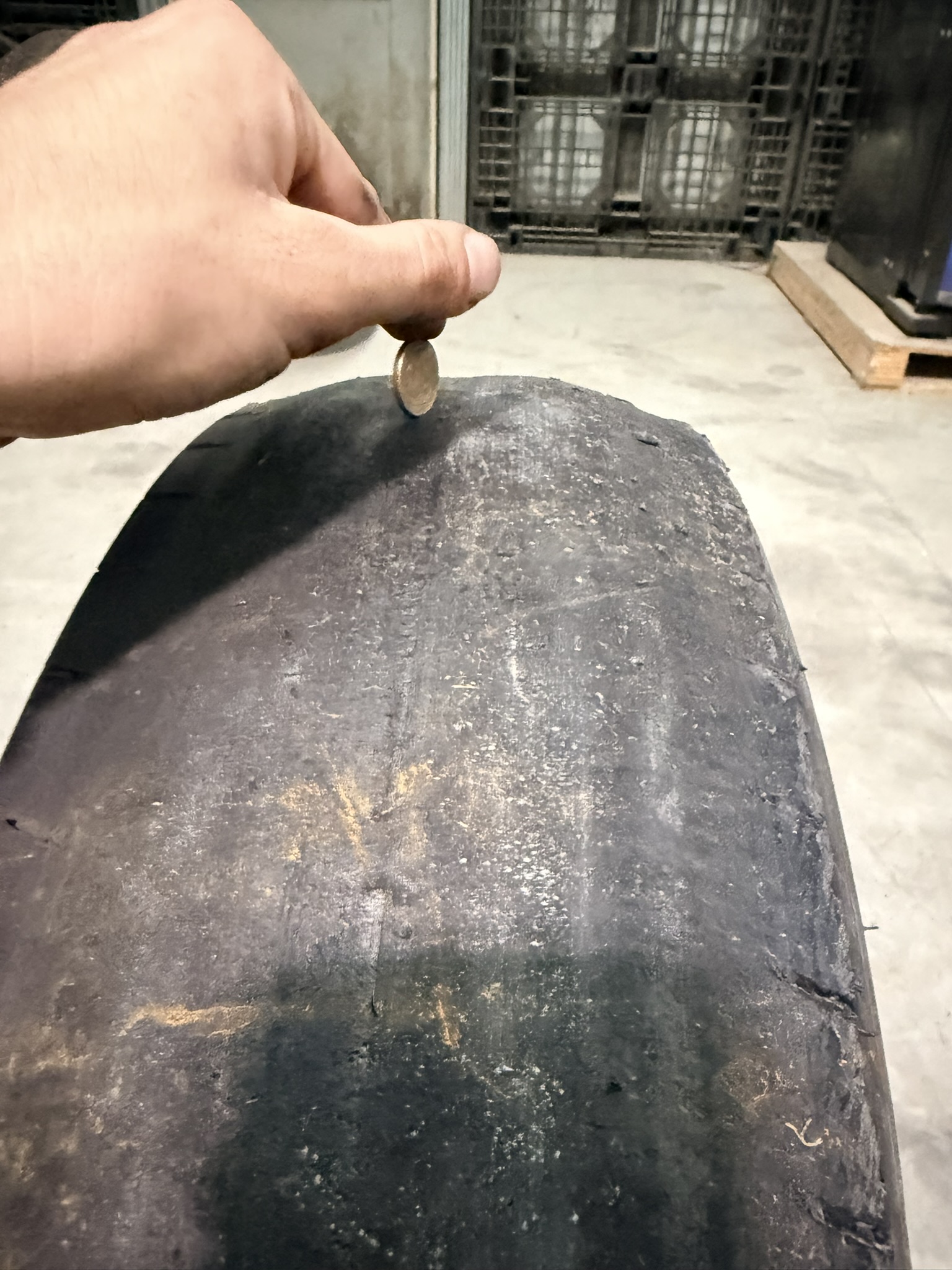
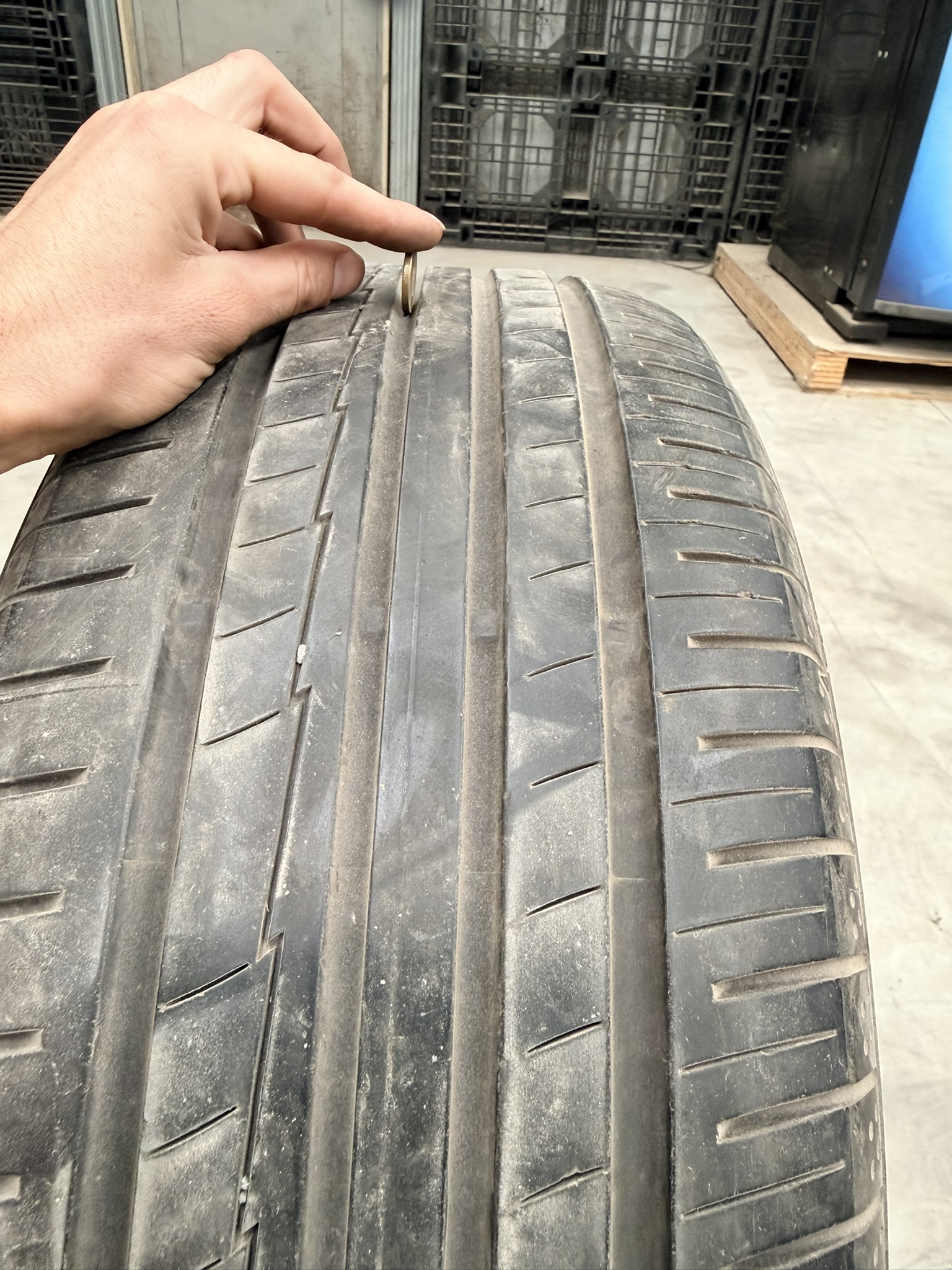
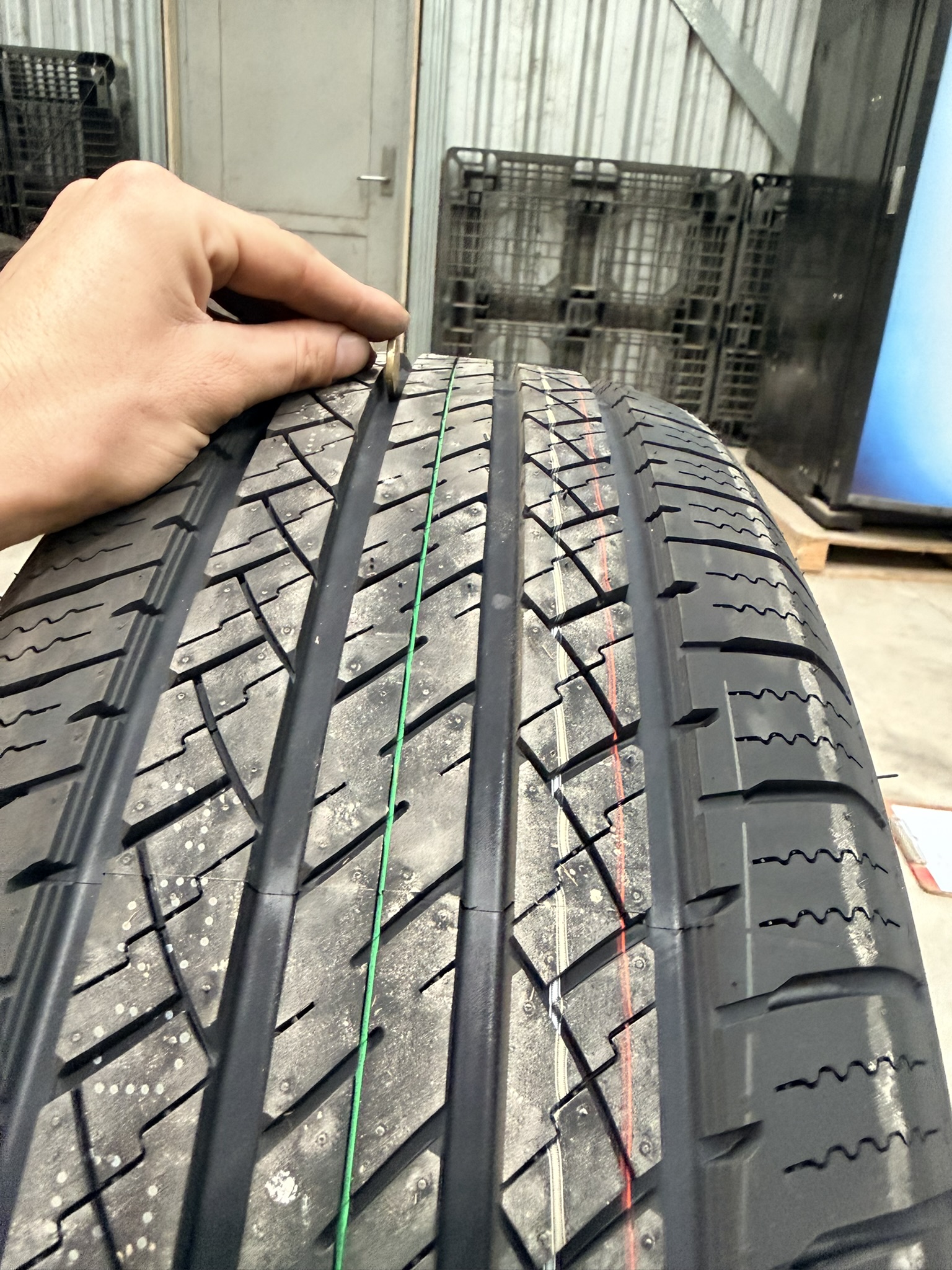
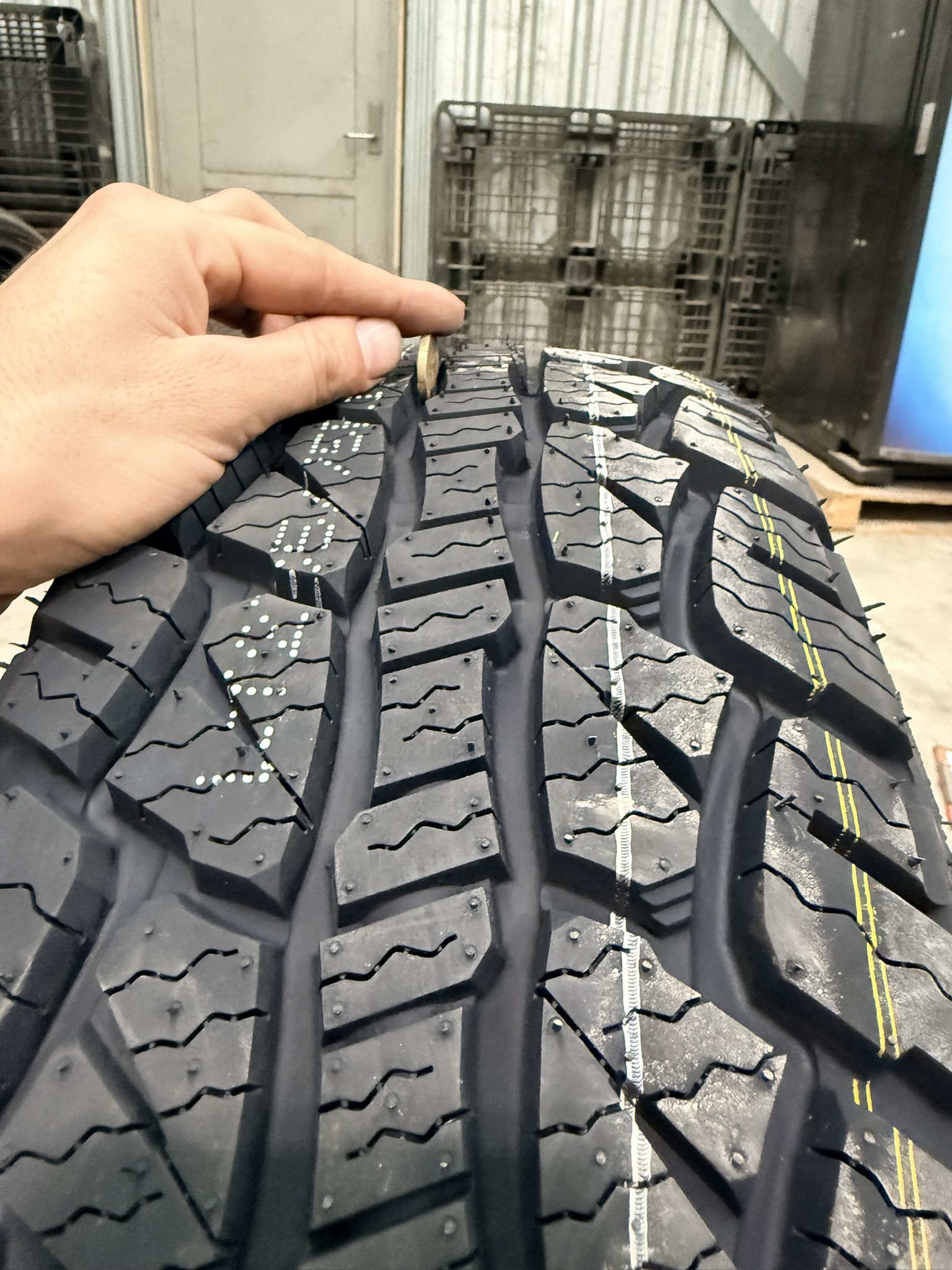
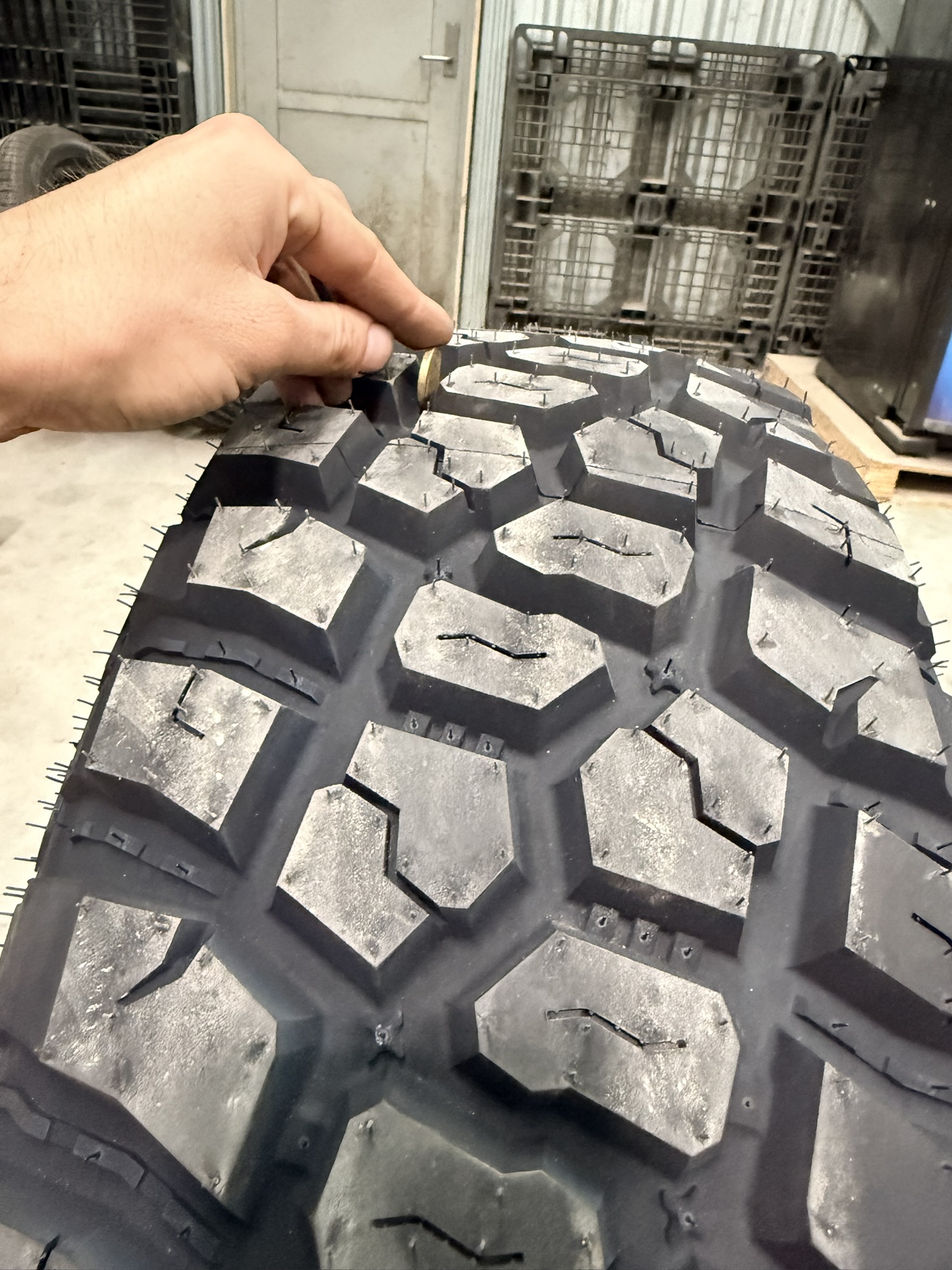
🪙 20 Cent Coin Test: Insert a NZ 20 cent coin into the main groove. If you can see the "20" on the coin, your tread is below 3mm and you should plan for replacement soon.
🔍
TYRE CRACKING — PASS VS FAIL

Some surface cracking is normal with age. Here's what's acceptable and what fails WOF:

✓ PASS — Minor Cracking
Minor tyre cracking - passes WOF
  • Surface crazing only
  • Does not reach tyre cords
  • No structural compromise
  • Inspector notes it but passes
✗ FAIL — Severe Cracking
Severe tyre cracking - fails WOF
  • Deep cracks reaching cords
  • Cuts over 25mm long to cords
  • Structural damage visible
  • Significant perishing/age
✗ Also Fails WOF: Bulges or lumps (internal damage), exposed or cut cords, nails/objects embedded, string-type repairs visible from outside, significant perishing due to age, moisture or UV exposure.
📅 Age Check: Check the DOT code on your sidewall. The last 4 digits show week and year of manufacture (e.g., 2419 = week 24 of 2019). Tyres over 10 years old should be replaced regardless of appearance.
❄️
WINTER TYRE REQUIREMENTS

Winter tyres have special identification and requirements in NZ.

How to identify a winter tyre Winter tyre identification — 3PMSF symbol and STUDLESS marking

❄️ 3 Peaks Mountain + Snowflake (3PMSF)

Official winter tyre certification symbol. Tyres with this symbol must have:

  • 4mm minimum tread depth (not 1.5mm)
  • Fitted to ALL 4 wheels if used
  • Cannot mix with non-winter tyres

M+S (Mud & Snow)

Basic mud and snow rating. NOT the same as a true winter tyre:

  • Standard 1.5mm minimum tread depth
  • No requirement to fit all 4
  • Less stringent testing standard
⚠️ Alpine Road Requirements: Some NZ alpine roads require chains or winter tyres during winter. Winter tyres with 3PMSF symbol can substitute for chains where signs indicate "chains or suitable 4WD vehicle".
✗ WOF Fail: Mixing winter tyres (3PMSF marked) with non-winter tyres on the same vehicle for class MA, MB, MC, MD1, MD2 or NA vehicles. If you fit winter tyres, they must be on ALL road wheels.
🚫
DAMAGE & REQUIRED MARKINGS

Tyres with removed or obscured information will fail WOF. Here's what must be visible:

Tyre with information removed Info removed (circled areas) — FAIL
Tyre with information obscured Info obscured by tape — FAIL

✓ Required Markings (Must Be Visible)

  • Manufacturer name
  • Brand name
  • Model/pattern name
  • Size designation
  • Load rating (index or ply)
  • Speed rating
  • Direction of rotation (if directional)

Common Causes of Damage

  • Information buffed/ground off
  • Sidewall damage from kerbs
  • Tape or paint covering markings
  • Severe weathering/UV damage
  • Chemical exposure

⚠️ TPMS Warning Light

If your vehicle has TPMS (Tyre Pressure Monitoring System), an active warning light is a WOF fail:

TPMS warning symbol

If this symbol is illuminated on your dashboard:

  • Check and adjust tyre pressures
  • If sensor removed, it must be replaced or dash light disabled
  • Factory wheels removed? Sensor must be reinstalled or system properly disabled
✗ Instant WOF Fail: Any tyre marked "NOT FOR HIGHWAY USE", "NHS" (Not for Highway Service), "FOR TRAILER USE ONLY", "ADV" (Agricultural Drawn Vehicle), or "RACING PURPOSES ONLY".
📋
COMPLETE WOF RULES SUMMARY

Quick reference for all NZ WOF tyre requirements.

Rule Requirement Priority
Tread Depth 1.5mm minimum in principal grooves, full circumference CRITICAL
Winter Tyre Tread 4mm minimum for tyres marked with 3PMSF symbol CRITICAL
Same Axle — Size Identical size designation on same axle CRITICAL
Same Axle — Construction Same carcass type (radial, bias-ply, run-flat) CRITICAL
Same Axle — Pattern Same pattern type (symmetric, asymmetric, directional) CRITICAL
Load Rating Same-axle tyres within 2 load index points IMPORTANT
Speed Rating Must match or exceed vehicle's max speed or limit IMPORTANT
Diameter Change Max 5% larger than OE without LVV certification IMPORTANT
Tread Position Must not protrude beyond body panels/guards STANDARD
Required Markings Manufacturer, brand, size, load, speed must be visible STANDARD
Damage No bulges, deep cracks (25mm+), exposed cords, etc. CRITICAL
SPEED RATING REFERENCE (Complete)
Symbol Max Speed Symbol Max Speed
A1 5 km/h A2 10 km/h
A3 15 km/h A4 20 km/h
A5 25 km/h A6 30 km/h
A7 35 km/h A8 40 km/h
B 50 km/h C 60 km/h
D 65 km/h E 70 km/h
F 80 km/h G 90 km/h
J 100 km/h K 110 km/h
L 120 km/h M 130 km/h
N 140 km/h P 150 km/h
Q 160 km/h R 170 km/h
S 180 km/h T 190 km/h
U 200 km/h H 210 km/h
V 240 km/h ZR 240+ km/h
W 270 km/h Y 300 km/h
(Y) 300+ km/h
Common NZ ratings: Q (winter/4WD), S/T (family cars), H/V (sports sedans), W/Y (performance)
LOAD INDEX REFERENCE (50-160)
Index kg Index kg Index kg Index kg
50 190 75 387 100 800 125 1650
51 195 76 400 101 825 126 1700
52 200 77 412 102 850 127 1750
53 206 78 425 103 875 128 1800
54 212 79 437 104 900 129 1850
55 218 80 450 105 925 130 1900
56 224 81 462 106 950 131 1950
57 230 82 475 107 975 132 2000
58 236 83 487 108 1000 133 2060
59 243 84 500 109 1030 134 2120
60 250 85 515 110 1060 135 2180
61 257 86 530 111 1090 136 2240
62 265 87 545 112 1120 137 2300
63 272 88 560 113 1150 138 2360
64 280 89 580 114 1180 139 2430
65 290 90 600 115 1215 140 2500
66 300 91 615 116 1250 145 2900
67 307 92 630 117 1285 150 3350
68 315 93 650 118 1320 155 3875
69 325 94 670 119 1360 160 4500
70 335 95 690 120 1400
71 345 96 710 121 1450
72 355 97 730 122 1500
73 365 98 750 123 1550
74 375 99 775 124 1600
📊 Dual Load Ratings (e.g., 121/118)

Light truck (LT) tyres often show two load indices like 121/118. The first number (121 = 1450kg) is for single rear wheel fitment. The second (118 = 1320kg) is for dual rear wheel (dually) fitment where reduced airflow means lower capacity. Always use the appropriate rating for your vehicle's wheel configuration.

🏷️ COMMON TYRE SYMBOLS & MARKINGS

Understanding the letters and symbols on your tyre sidewall:

Construction & Type Codes
R Radial construction (most common)
D or B Diagonal/Bias ply construction
F Run-flat tyre construction
P Passenger car tyre (P-metric)
LT Light Truck tyre
C Commercial/Cargo van tyre
ST Special Trailer tyre
T Temporary spare tyre
Run-Flat Markings (by brand)
RFT / ROF Run-Flat Tyre (generic)
RSC Run-flat System Component (BMW)
MOE Mercedes Original Extended
AOE Audi Original Extended
SSR Self-Supporting Run-flat
EMT Extended Mobility Tyre
ZP Zero Pressure (Michelin)
DSST Dunlop Self-Supporting
Load & Reinforcement
XL Extra Load (reinforced)
RF Reinforced
EL Extra Load (same as XL)
SL Standard Load
HL High Load (EV tyres)
E Load Range E (10 ply)
D Load Range D (8 ply)
C Load Range C (6 ply)
Weather & Season Ratings
M+S / M&S Mud and Snow rated
❄️ 3PMSF Three Peak Mountain Snowflake (severe snow)
A/T All Terrain
H/T Highway Terrain
M/T Mud Terrain
R/T Rugged Terrain
A/S All Season
UHP Ultra High Performance
OE (Original Equipment) Codes
* BMW approved
MO Mercedes Original
AO Audi Original
N0-N4 Porsche approved
J Jaguar approved
VOL Volvo approved
T0/T1 Tesla approved
RO1/RO2 Audi Quattro/RS
Other Important Markings
DOT US Dept of Transportation compliant
E-mark ECE regulation compliant
TWI Tread Wear Indicator location
OUTSIDE Asymmetric - this side faces out
INSIDE Asymmetric - this side faces in
↻ Arrow Directional rotation direction
TUBELESS No inner tube required
MAX PSI Maximum cold inflation pressure
📍 Tyre Position Rule: Tyre tread must stay within body panels or mudguard extensions. For utes and SUVs (class NA/MC), tread may protrude up to 25mm if covered by a flare or wheel arch extension.
Tyre and body panel position diagram
💡 Pro Tip: When buying used tyres, always check the DOT code (last 4 digits = week/year made). Even if tread looks good, tyres over 6-8 years old may have internal degradation not visible externally.
🔧
AXLE COMPATIBILITY CHECKER

Check if your tyre setup meets NZ WOF same-axle requirements. Configure each position and see real-time results.

NEED NEW TYRES?

Browse our range of quality tyres with free North Island delivery.

SHOP TYRES NOW →
Help
Edit Tyre — Front Left
Copy to other positions:
Tyre Dispatch - Helpful Tools Section
HELPFUL TOOLS

Find Your Tyre

Not sure what size? Our guide helps you find the perfect tyre for your vehicle.

Start Guide

Tyre Size Calculator

Compare up to 4 tyre sizes side-by-side with our visual calculator.

Try Calculator
Checking...

Shop In-Store

Visit us at our Te Puke location for expert tyre advice and same-day fitting.

Get Directions
Auckland

Free Delivery

Free shipping across the North Island (non-rural). Fast, reliable service to your door.

Delivery Info
WOF
✗ FAIL
✓ PASS

WOF Tyre Guide

Learn the 1.5mm minimum and what fails a WOF inspection.

Read Guide
$420
FAST
QUOTE
WINZ Quotes Available

Instant Quote

Tell us what you need and get a competitive quote fast. WINZ quotes available.

Get Quote
Which Terrain Tyres Do You Really Need? A 4×4 Guide for NZ Drivers

Taylor Houghton

New Zealand’s terrain can be unpredictable at best and brutal at worst. From loose gravel in Central Otago to muddy...

Read more
Is it Time to Invest in New Tyres?

Taylor Houghton

Few car-related purchases deliver as much instant gratification as a new set of tyres. The difference is noticeable the moment...

Read more
Tyre Fitting & Balancing in NZ: What It Is and Why It Matters

Taylor Houghton

Tyre fitting and wheel balancing might not sound urgent until your steering wheel starts vibrating on the motorway or one...

Read more
Winter Driving in NZ: Should You Consider Snow Tyres or Chains?

Taylor Houghton

When people talk about winter driving in New Zealand, there’s usually one of two reactions: a confident shrug, or full-blown...

Read more

Join Our Tyre Dispatch Family!

Be the first to know about new collections and exclusive offers.